AI Routing: From Nice-to-Have to Necessary

August 12, 2026
Blog

Route optimization used to be a nice-to-have for transportation fleets. In 2026, it's closer to an economic survival lever. Dead mileage (the miles a vehicle drives without a paying passenger) is one of the largest hidden costs in non-emergency medical transportation (NEMT), and most states only reimburse loaded miles, not the deadhead in between. Every inefficient route is money left on the table.

At the same time, demand is climbing fast. With roughly 11,000 Americans turning 65 every day this year and older adults booking medical visits at nearly three times the rate of younger patients, NEMT fleets are being asked to serve more trips with the same drivers and vehicles. Static, once-a-day dispatch schedules can't absorb that kind of volume without AI doing some of the sequencing.

What's actually changing

The shift isn't just "add AI to dispatch." It's a move from fixed daily schedules to routing that re-plans continuously as conditions change: a cancellation, a traffic delay, a new broker request mid-shift. Machine learning models now factor in vehicle type (ambulatory, wheelchair-accessible, bariatric), appointment windows, and driver eligibility in the same pass, then adjust automatically rather than waiting for a dispatcher to notice something went wrong.

That real-time re-optimization is where the efficiency gains show up: fewer empty miles between trips, more completed rides per driver per shift, and less manual dispatcher intervention during a busy day.

How Curb Optima applies it

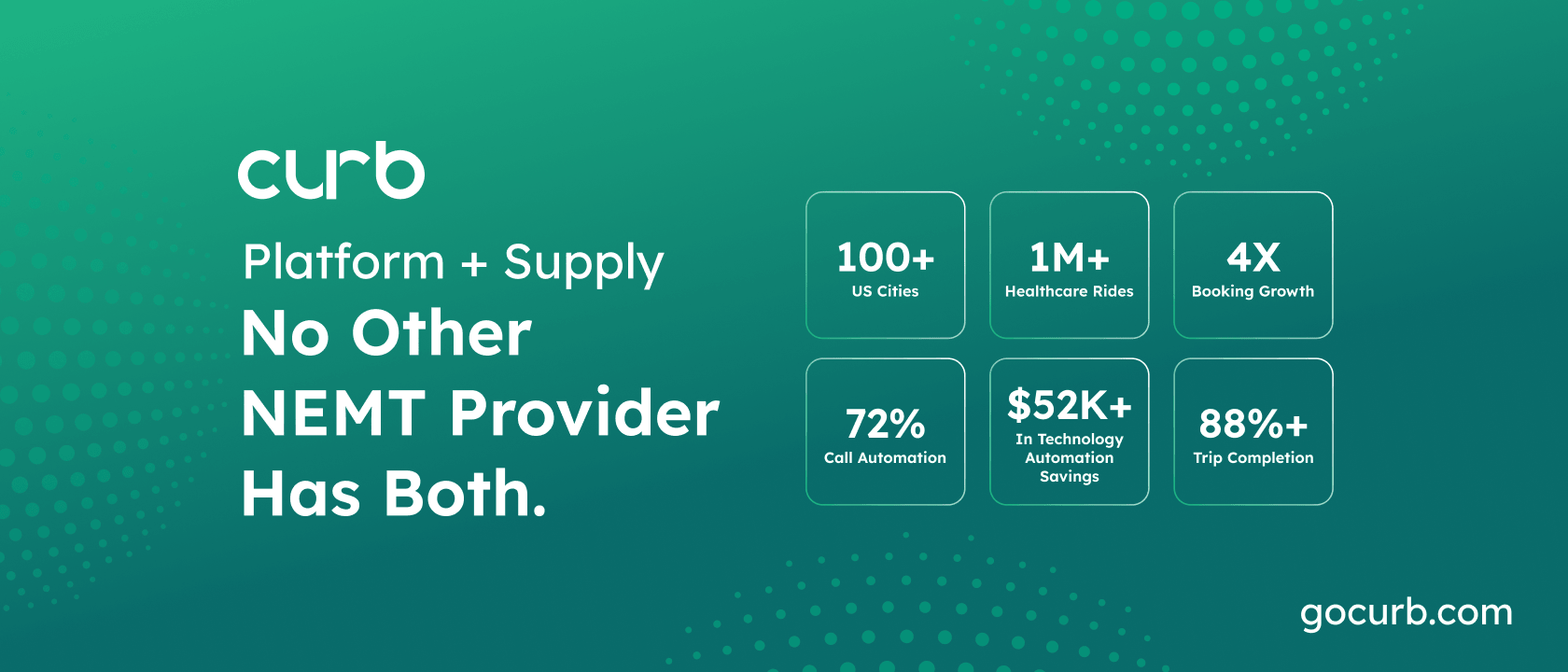
Curb Optima, powered by Autofleet, is our take on this shift: an AI routing engine that plans and continuously re-sequences NEMT trips as conditions change, then pushes the updated manifest straight to the driver's Dash+ tablet. It runs against Curb's own network of 100,000+ licensed vehicles in 100+ US cities, including the largest wheelchair-accessible vehicle supply in North America, so the routing has real supply to work with rather than a fixed, static fleet.

The result for fleets and brokers on Curb Flow has been drivers spending 26% more time on hired trips and driving 16% more hired miles, with driver earnings up more than 20% in some markets, all from better-matched, better-sequenced trips.

Catch us at NEMTAC Transform

We'll be talking through more of this, and demoing Curb Optima live, at NEMTAC Transform 2026, August 16 to 19 in Orlando. Find us at booth 321 if you want to see it in action. 

Ready to ride?

Download Curb

AI Routing: From Nice-to-Have to Necessary

August 12, 2026
Blog

Route optimization used to be a nice-to-have for transportation fleets. In 2026, it's closer to an economic survival lever. Dead mileage (the miles a vehicle drives without a paying passenger) is one of the largest hidden costs in non-emergency medical transportation (NEMT), and most states only reimburse loaded miles, not the deadhead in between. Every inefficient route is money left on the table.

At the same time, demand is climbing fast. With roughly 11,000 Americans turning 65 every day this year and older adults booking medical visits at nearly three times the rate of younger patients, NEMT fleets are being asked to serve more trips with the same drivers and vehicles. Static, once-a-day dispatch schedules can't absorb that kind of volume without AI doing some of the sequencing.

What's actually changing

The shift isn't just "add AI to dispatch." It's a move from fixed daily schedules to routing that re-plans continuously as conditions change: a cancellation, a traffic delay, a new broker request mid-shift. Machine learning models now factor in vehicle type (ambulatory, wheelchair-accessible, bariatric), appointment windows, and driver eligibility in the same pass, then adjust automatically rather than waiting for a dispatcher to notice something went wrong.

That real-time re-optimization is where the efficiency gains show up: fewer empty miles between trips, more completed rides per driver per shift, and less manual dispatcher intervention during a busy day.

How Curb Optima applies it

Curb Optima, powered by Autofleet, is our take on this shift: an AI routing engine that plans and continuously re-sequences NEMT trips as conditions change, then pushes the updated manifest straight to the driver's Dash+ tablet. It runs against Curb's own network of 100,000+ licensed vehicles in 100+ US cities, including the largest wheelchair-accessible vehicle supply in North America, so the routing has real supply to work with rather than a fixed, static fleet.

The result for fleets and brokers on Curb Flow has been drivers spending 26% more time on hired trips and driving 16% more hired miles, with driver earnings up more than 20% in some markets, all from better-matched, better-sequenced trips.

Catch us at NEMTAC Transform

We'll be talking through more of this, and demoing Curb Optima live, at NEMTAC Transform 2026, August 16 to 19 in Orlando. Find us at booth 321 if you want to see it in action. 

Ready to ride?

Download Curb

AI Routing: From Nice-to-Have to Necessary

August 12, 2026
Blog

Route optimization used to be a nice-to-have for transportation fleets. In 2026, it's closer to an economic survival lever. Dead mileage (the miles a vehicle drives without a paying passenger) is one of the largest hidden costs in non-emergency medical transportation (NEMT), and most states only reimburse loaded miles, not the deadhead in between. Every inefficient route is money left on the table.

At the same time, demand is climbing fast. With roughly 11,000 Americans turning 65 every day this year and older adults booking medical visits at nearly three times the rate of younger patients, NEMT fleets are being asked to serve more trips with the same drivers and vehicles. Static, once-a-day dispatch schedules can't absorb that kind of volume without AI doing some of the sequencing.

What's actually changing

The shift isn't just "add AI to dispatch." It's a move from fixed daily schedules to routing that re-plans continuously as conditions change: a cancellation, a traffic delay, a new broker request mid-shift. Machine learning models now factor in vehicle type (ambulatory, wheelchair-accessible, bariatric), appointment windows, and driver eligibility in the same pass, then adjust automatically rather than waiting for a dispatcher to notice something went wrong.

That real-time re-optimization is where the efficiency gains show up: fewer empty miles between trips, more completed rides per driver per shift, and less manual dispatcher intervention during a busy day.

How Curb Optima applies it

Curb Optima, powered by Autofleet, is our take on this shift: an AI routing engine that plans and continuously re-sequences NEMT trips as conditions change, then pushes the updated manifest straight to the driver's Dash+ tablet. It runs against Curb's own network of 100,000+ licensed vehicles in 100+ US cities, including the largest wheelchair-accessible vehicle supply in North America, so the routing has real supply to work with rather than a fixed, static fleet.

The result for fleets and brokers on Curb Flow has been drivers spending 26% more time on hired trips and driving 16% more hired miles, with driver earnings up more than 20% in some markets, all from better-matched, better-sequenced trips.

Catch us at NEMTAC Transform

We'll be talking through more of this, and demoing Curb Optima live, at NEMTAC Transform 2026, August 16 to 19 in Orlando. Find us at booth 321 if you want to see it in action.