

Boston has a transportation problem it hasn't fully named yet. For more than a decade, taxi ridership in the city has been in structural decline, driven by the rise of app-based rideshare. The data is well documented: trip volumes fell from 14.5 million in 2013 to 12.8 million in 2014, a drop of nearly 12%. By the first half of 2015, ridership had fallen another 22%. Medallion values collapsed. Drivers who had built careers and businesses around taxi work began exiting the industry.
That baseline erosion was damaging enough. But the ground is shifting again.
Rideshare platforms have now launched shuttle services at Logan Airport. For Boston taxi drivers, Logan has historically been one of the few remaining trip sources that offered predictability: a physical queue, steady demand, a known revenue floor. The shuttle expansion puts that floor at risk. Drivers who have already absorbed years of volume loss are now facing pressure on the last part of the business that made the math work. Some are reconsidering staying in the industry at all.
"When passenger volumes rise but taxi pickups fall, the gap doesn't disappear. Riders are still going somewhere. The question is who's taking them."
This is not simply a story about competition between transportation providers. It is a story about what happens to a city's mobility when one part of its supply chain quietly exits. Late-night service thins out first. Then coverage in underserved neighborhoods. Then reliability during peak events, when surge pricing from app-based alternatives reaches levels that price out the riders who can least afford it.
Boston is hosting the 2026 FIFA World Cup. The city is expected to absorb significant visitor volume across multiple match days, on top of its normal summer demand. For that to work, Boston needs ground transportation supply that is deep, professional, and regulated. Right now, the trajectory is pointing the wrong direction.
What's working in other cities
The question is not whether this problem is solvable. In markets where Curb Flow has been deployed, the results show that coordinated, tech-enabled dispatch can restore taxi supply and grow it.
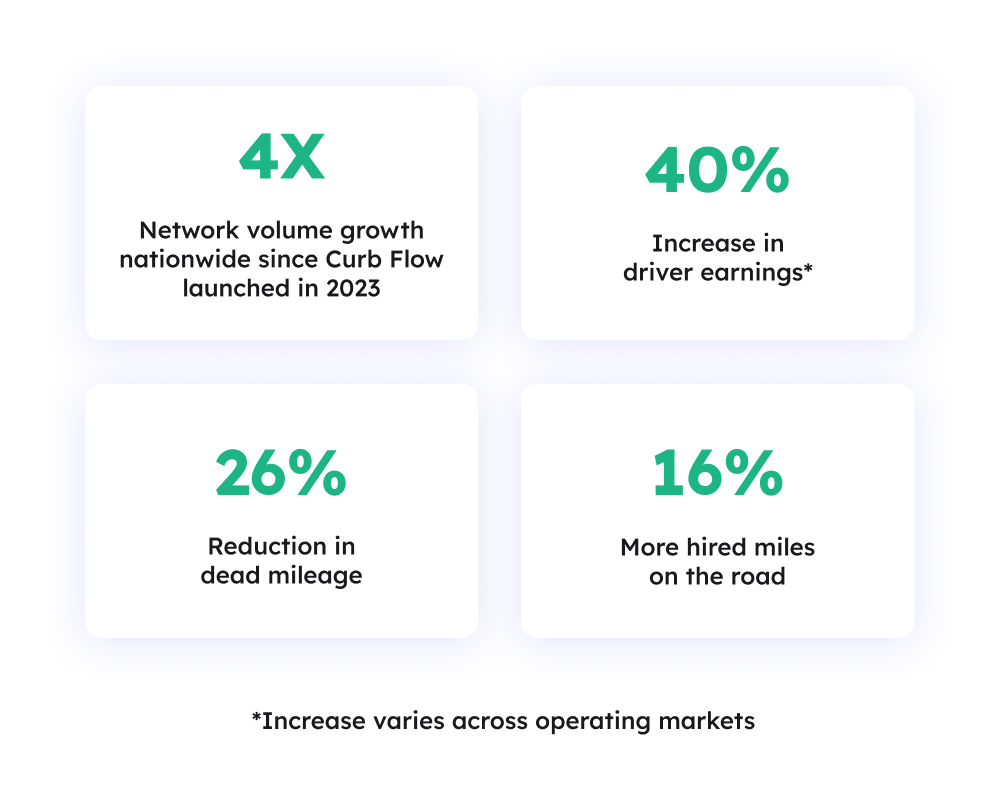
In Los Angeles, Curb Flow now accounts for 60% of all taxi trips. In New York, it has become a meaningful portion of Yellow Taxi volume. Drivers across both markets are spending 26% more time on trips and logging 16% more hired miles, meaning the work is more continuous and more valuable per shift.
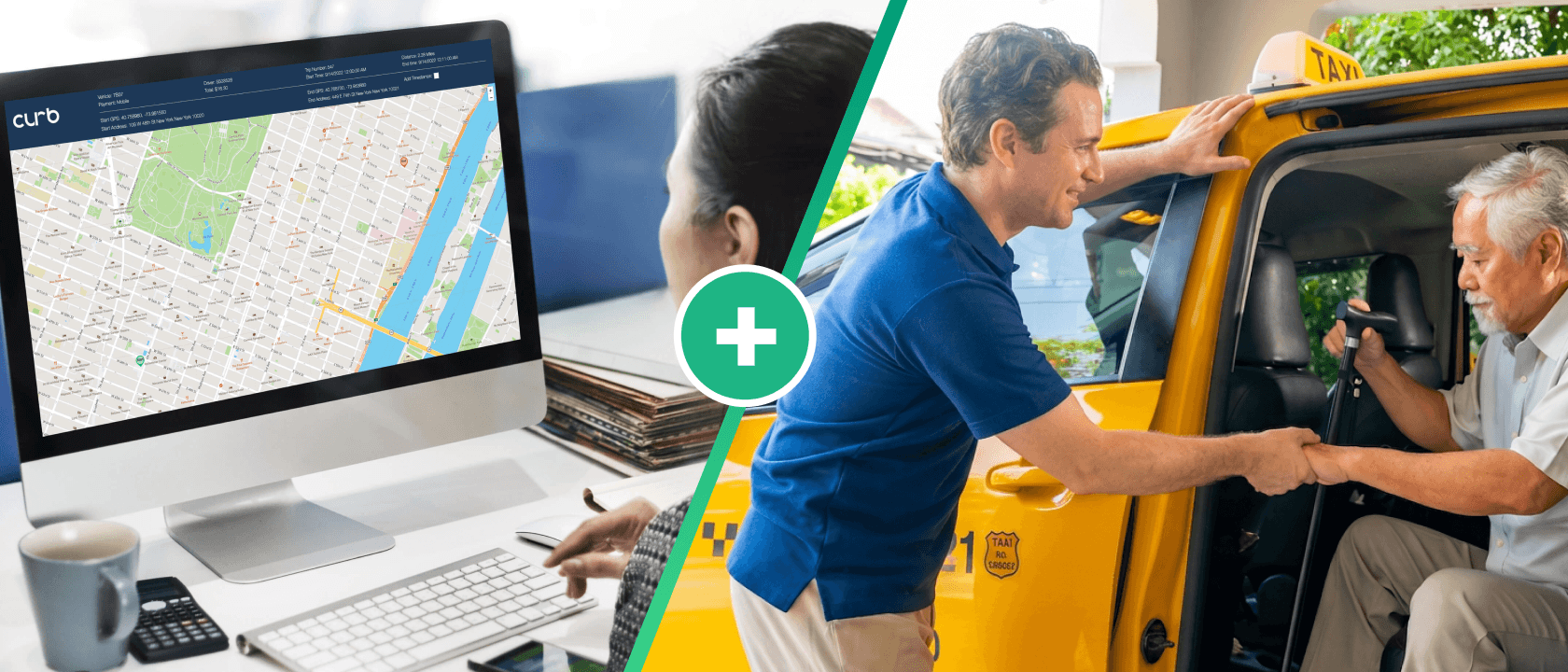
The underlying mechanic is straightforward. Curb Flow connects taxi drivers to demand from third-party apps and platforms, including those that taxi drivers previously couldn't access. It doesn't replace the taxi model. It extends it. Drivers remain professional, licensed, and government-regulated. They gain access to a larger pool of trip requests without losing the structure that makes taxi work distinct from gig-economy alternatives.
Boston already has evidence that this approach works locally. In 2023, Curb saw a 126% increase in airport trips in the city and overall ride volume grew more than 230% year over year. That growth happened before a formal Curb Flow deployment. It reflects what is possible when riders can find and book taxis through the channels they already use.
Where Boston stands now
Curb is currently working with the City of Boston on a TNC-Referred Pilot that would allow for a more complete Curb Flow deployment. The proposal has moved through the mayor's office, the city attorney, the city council, and the hackney licensing division. It is closer to approval than it has ever been.
The window to act is not indefinite. If driver attrition continues into the World Cup year, the city will be trying to rebuild supply under pressure rather than sustaining supply that already exists. That is a harder and slower problem to solve.
"Boston's taxi drivers are professional, licensed, and regulated. They represent a transportation resource the city built over decades. Curb Flow is how you keep that resource in service."
The cities that have moved quickly on this have seen real outcomes. The cities that have waited have watched their supply problems compound. Boston has the infrastructure, the regulatory framework, and now a proven model. What it needs is the decision to move forward.
We're ready to support that conversation with data, market experience, and a deployment plan built around what Boston's riders and drivers actually need.
About Curb Flow
Curb Flow connects licensed taxi drivers to demand across third-party apps and platforms, growing trip volume and driver earnings without changing the taxi model. Active in New York, Los Angeles, Miami, Washington D.C., and additional cities coming online in 2026. To learn more or discuss a pilot in your market, contact the Curb team.

.png)
.png)




---Optimized.jpg)






.jpg)


.jpg)


