Bridging the Accessible Ride Divide, Without Creating a New System

September 1, 2026
Blog

Wheelchair-accessible transportation occupies a tricky crossroads in city mobility: it’s vital baseline infrastructure for riders who rely on it, yet notoriously hard to operate sustainably at the scale most cities truly require. You need a dedicated fleet, a 24/7 call center, drivers trained and ready on demand, and compliance reporting that meets regulatory expectations. Those fixed expenses barely change whether a city delivers ten trips per day or ten thousand. That reality is precisely why many municipalities either fall short for accessible riders or outsource the whole effort to a vendor and hope it stays intact.

Chicago chose another path. Beginning in 2020, the city’s Centralized Wheelchair Accessible Vehicle Dispatch Service has been delivered fully through Curb, in partnership with BACP and MOPD, positioning accessible service as foundational dispatch infrastructure, not a bolt-on program.

Riders arrange on-demand or advance-scheduled trips either via a dedicated call center or straight through the Curb Passenger App, supported by a citywide network of 450+ WAV operators.

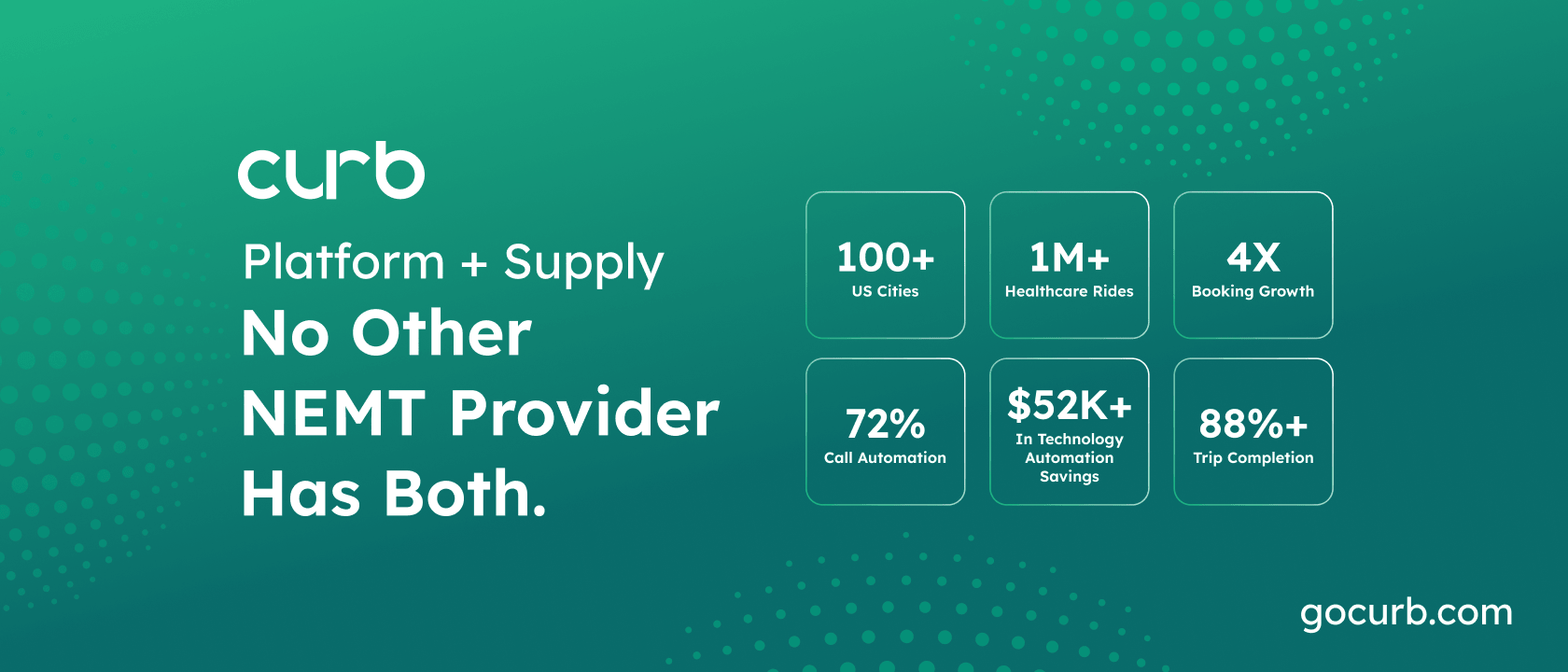
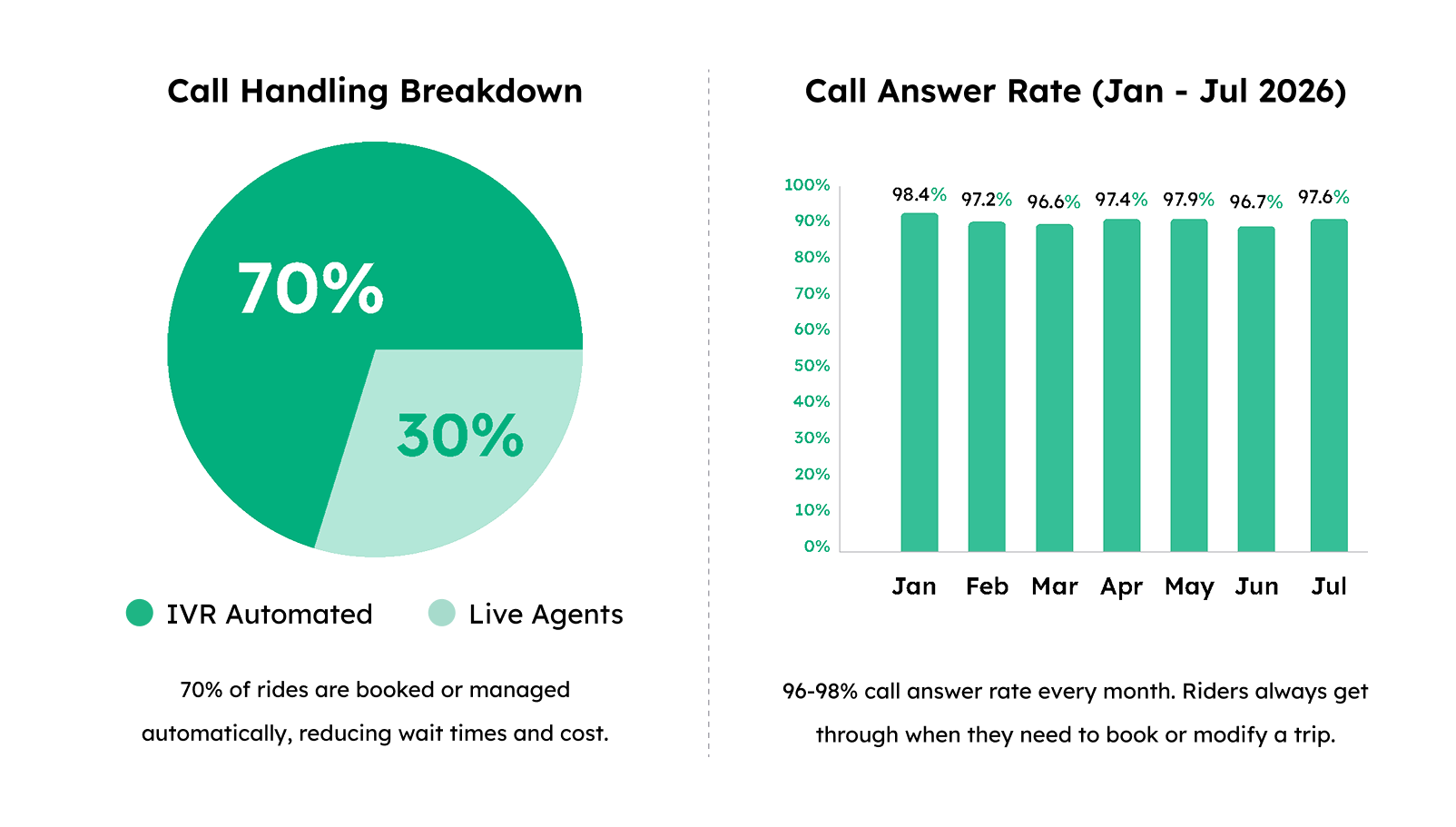
What keeps the model sustainable is automation handling most of the workload behind the scenes, without riders feeling any added friction. In Chicago, the majority of WAV trips are booked or administered through IVR instead of a live agent, which is what makes a 97%+ average call answer rate financially viable at this scale. Riders reach the system consistently month after month, without the city absorbing the expense of running a fully staffed, live call center:
That dependability builds over time. Completed trips have increased each month this year, and the city’s net pickup rate has remained far above what’s typical across accessible transportation. Steady results are driven by treating WAV dispatch as core infrastructure, not a bolt-on program attached to the existing fleet.

Nothing about this demanded Chicago create or hire for even one brand-new system. It uses the very same dispatch operation, call-center teams, and app platform the city already depends on, simply expanded so it can better serve the riders who need it most.

Curb is honored to sponsor the International Association of Transportation Regulators’ (IATR) 39th Annual Conference, September 14–17 in Las Vegas. Meet us there to discuss how centralized WAV dispatch might fit your city.

Ready to ride?

Download Curb

Bridging the Accessible Ride Divide, Without Creating a New System

September 1, 2026
Blog

Wheelchair-accessible transportation occupies a tricky crossroads in city mobility: it’s vital baseline infrastructure for riders who rely on it, yet notoriously hard to operate sustainably at the scale most cities truly require. You need a dedicated fleet, a 24/7 call center, drivers trained and ready on demand, and compliance reporting that meets regulatory expectations. Those fixed expenses barely change whether a city delivers ten trips per day or ten thousand. That reality is precisely why many municipalities either fall short for accessible riders or outsource the whole effort to a vendor and hope it stays intact.

Chicago chose another path. Beginning in 2020, the city’s Centralized Wheelchair Accessible Vehicle Dispatch Service has been delivered fully through Curb, in partnership with BACP and MOPD, positioning accessible service as foundational dispatch infrastructure, not a bolt-on program.

Riders arrange on-demand or advance-scheduled trips either via a dedicated call center or straight through the Curb Passenger App, supported by a citywide network of 450+ WAV operators.

What keeps the model sustainable is automation handling most of the workload behind the scenes, without riders feeling any added friction. In Chicago, the majority of WAV trips are booked or administered through IVR instead of a live agent, which is what makes a 97%+ average call answer rate financially viable at this scale. Riders reach the system consistently month after month, without the city absorbing the expense of running a fully staffed, live call center:

That dependability builds over time. Completed trips have increased each month this year, and the city’s net pickup rate has remained far above what’s typical across accessible transportation. Steady results are driven by treating WAV dispatch as core infrastructure, not a bolt-on program attached to the existing fleet.

Nothing about this demanded Chicago create or hire for even one brand-new system. It uses the very same dispatch operation, call-center teams, and app platform the city already depends on, simply expanded so it can better serve the riders who need it most.

Curb is honored to sponsor the International Association of Transportation Regulators’ (IATR) 39th Annual Conference, September 14–17 in Las Vegas. Meet us there to discuss how centralized WAV dispatch might fit your city.

Ready to ride?

Download Curb

Bridging the Accessible Ride Divide, Without Creating a New System

September 1, 2026
Blog

Wheelchair-accessible transportation occupies a tricky crossroads in city mobility: it’s vital baseline infrastructure for riders who rely on it, yet notoriously hard to operate sustainably at the scale most cities truly require. You need a dedicated fleet, a 24/7 call center, drivers trained and ready on demand, and compliance reporting that meets regulatory expectations. Those fixed expenses barely change whether a city delivers ten trips per day or ten thousand. That reality is precisely why many municipalities either fall short for accessible riders or outsource the whole effort to a vendor and hope it stays intact.

Chicago chose another path. Beginning in 2020, the city’s Centralized Wheelchair Accessible Vehicle Dispatch Service has been delivered fully through Curb, in partnership with BACP and MOPD, positioning accessible service as foundational dispatch infrastructure, not a bolt-on program.

Riders arrange on-demand or advance-scheduled trips either via a dedicated call center or straight through the Curb Passenger App, supported by a citywide network of 450+ WAV operators.

What keeps the model sustainable is automation handling most of the workload behind the scenes, without riders feeling any added friction. In Chicago, the majority of WAV trips are booked or administered through IVR instead of a live agent, which is what makes a 97%+ average call answer rate financially viable at this scale. Riders reach the system consistently month after month, without the city absorbing the expense of running a fully staffed, live call center:

That dependability builds over time. Completed trips have increased each month this year, and the city’s net pickup rate has remained far above what’s typical across accessible transportation. Steady results are driven by treating WAV dispatch as core infrastructure, not a bolt-on program attached to the existing fleet.

Nothing about this demanded Chicago create or hire for even one brand-new system. It uses the very same dispatch operation, call-center teams, and app platform the city already depends on, simply expanded so it can better serve the riders who need it most.

Curb is honored to sponsor the International Association of Transportation Regulators’ (IATR) 39th Annual Conference, September 14–17 in Las Vegas. Meet us there to discuss how centralized WAV dispatch might fit your city.